Composite insulators mainly rely on unidirectional glass fiber reinforced resin tie rods (commonly known as core rods) to withstand mechanical loads. The outstanding performance characteristics of FRP tie rods are high tensile strength and specific strength. The glass fibers in the pull rod are arranged in the positive direction along the axial stress direction, giving it a very high axial tensile strength, which can generally reach more than 1000 MPa. Therefore, the tensile failure strength of a pull rod with a diameter of only 18 mm can reach 250 kN. above. Since the density of pull rods is generally only 2.0 g/cm3, its specific strength (ratio of tensile strength to weight) is 5 to 6 times that of high-quality carbon structural steel. The high strength and high specific strength characteristics of the tie rod are the basis for the light weight, high strength and thin rod diameter of the composite insulator.
Although composite insulators completely rely on fiberglass tie rods to bear mechanical loads, the strength of the core rod is not equal to the strength of the composite insulator, because the core rod transmits the load through the end attachment of the insulator in order to be connected to the towers and conductors of the transmission line. Different connection structures will also lead to different degrees of stress concentration, but the end joint must be the place where mechanical stress is concentrated.
Therefore, the mechanical strength of a composite insulator actually depends more on the mechanical strength of the core rod than on the mechanical strength of its end joints,
That is, the utilization strength of the mandrel. Composite insulators with the same core rod but different connection structures have different mechanical strengths, so the utilization strength of the core rod is also different.
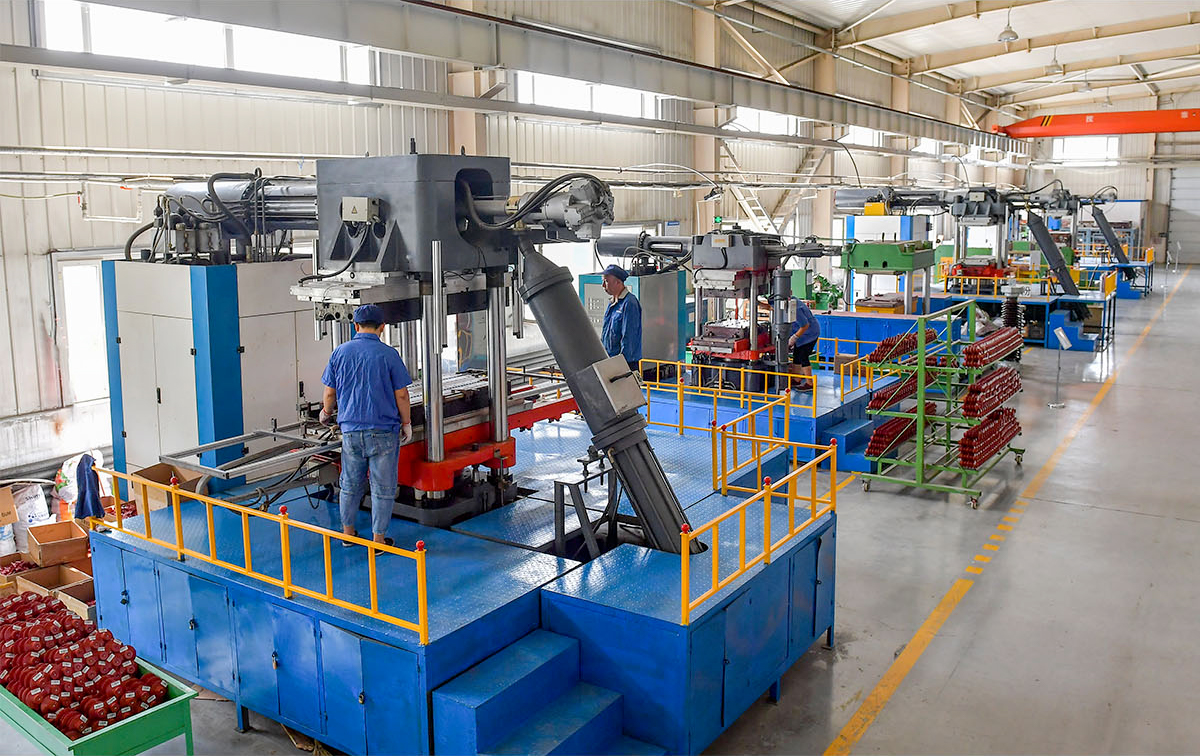
Composite insulator products are composed of fiberglass epoxy tie rods, silicone rubber sheds and hardware. The silicone rubber sheds use integral injection and pressurization technology to solve the key issue of interface electrical breakdown that affects the reliability of composite insulators. The connection between the glass tie rod and the hardware is made by advanced crimping workers equipped with an automatic sonic flaw detection system. It has high strength, beautiful appearance, small size and light weight. Hardware can be galvanized to prevent corrosion and used interchangeably with porcelain insulators.