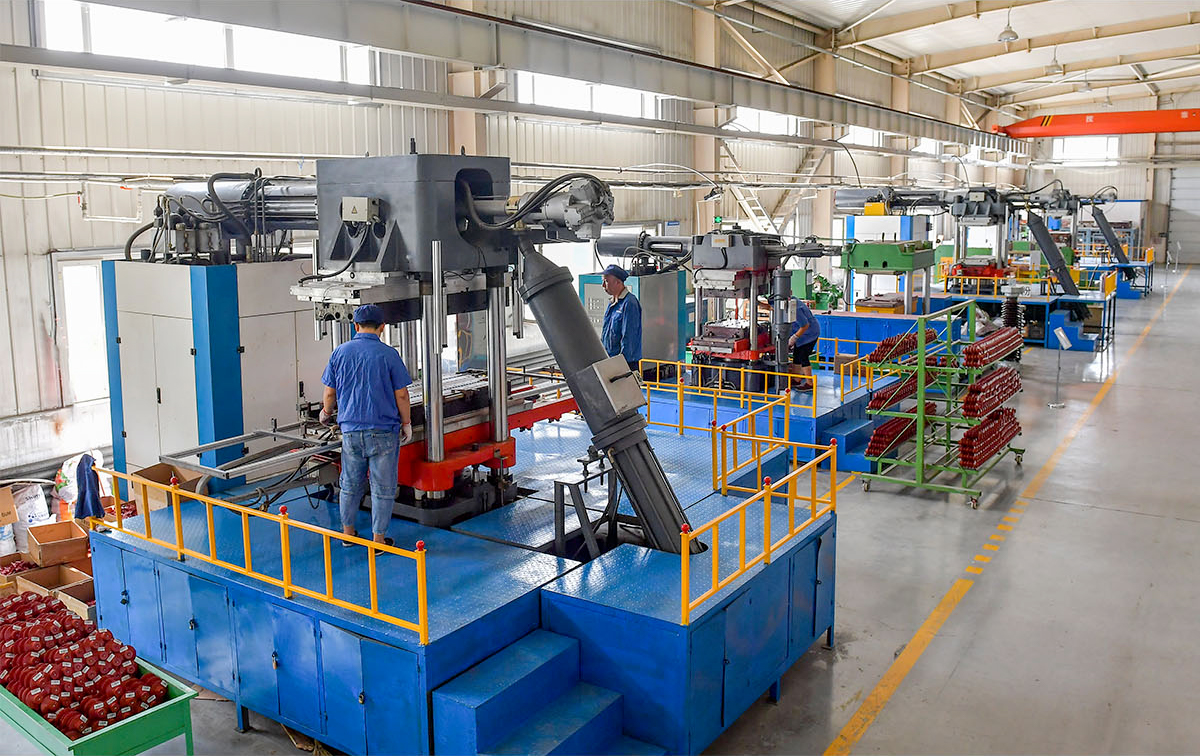
The end sealing of early composite insulators only used room temperature vulcanized silicone rubber or other sealants. As the failure of the solid seal leads to brittle breakage of the core rod or string drop accidents, major companies have begun to develop more effective sealing methods. Such as using HTV high temperature vulcanized rubber. Shape sealing adopts double sealing technology, end sealing rubber coating technology, quadruple sealing structure, built-in or external. Ring sealing, etc.: These measures effectively protect the connection between the core rod and metal accessories and ensure the reliable operation of the composite insulator.
In the past, the sealing process used by most domestic composite insulator manufacturers to produce composite insulators was to use highly elastic room temperature vulcanized silicone rubber adhesive to manually seal the shed sheath and fitting end faces. This room temperature curing bonding and sealing structure is affected by the operating process and bonding. Affected by the material, the bonding strength and sealing performance are poor, the seal is easily damaged, and it is difficult to maintain the sealing stability of the composite insulator for long-term operation. At present, many comparators and scientific research institutions of the improved high-temperature injection integral sealing process are conducting research on the sealing structure. Liu Bi, the traditional room temperature vulcanized silicone rubber bonding and sealing process and the improved high-temperature injection integral sealing process: The improved process uses high-temperature integral injection molding process. During the process of high-temperature and high-pressure injection of different materials, the flow of the rubber material can The air at the end seal is fully squeezed out, forming two sealing layers on the inner and outer surfaces of the hardware. Compared with the traditional sealing structure, the bonding effect is greatly improved.